
Cyber Awareness
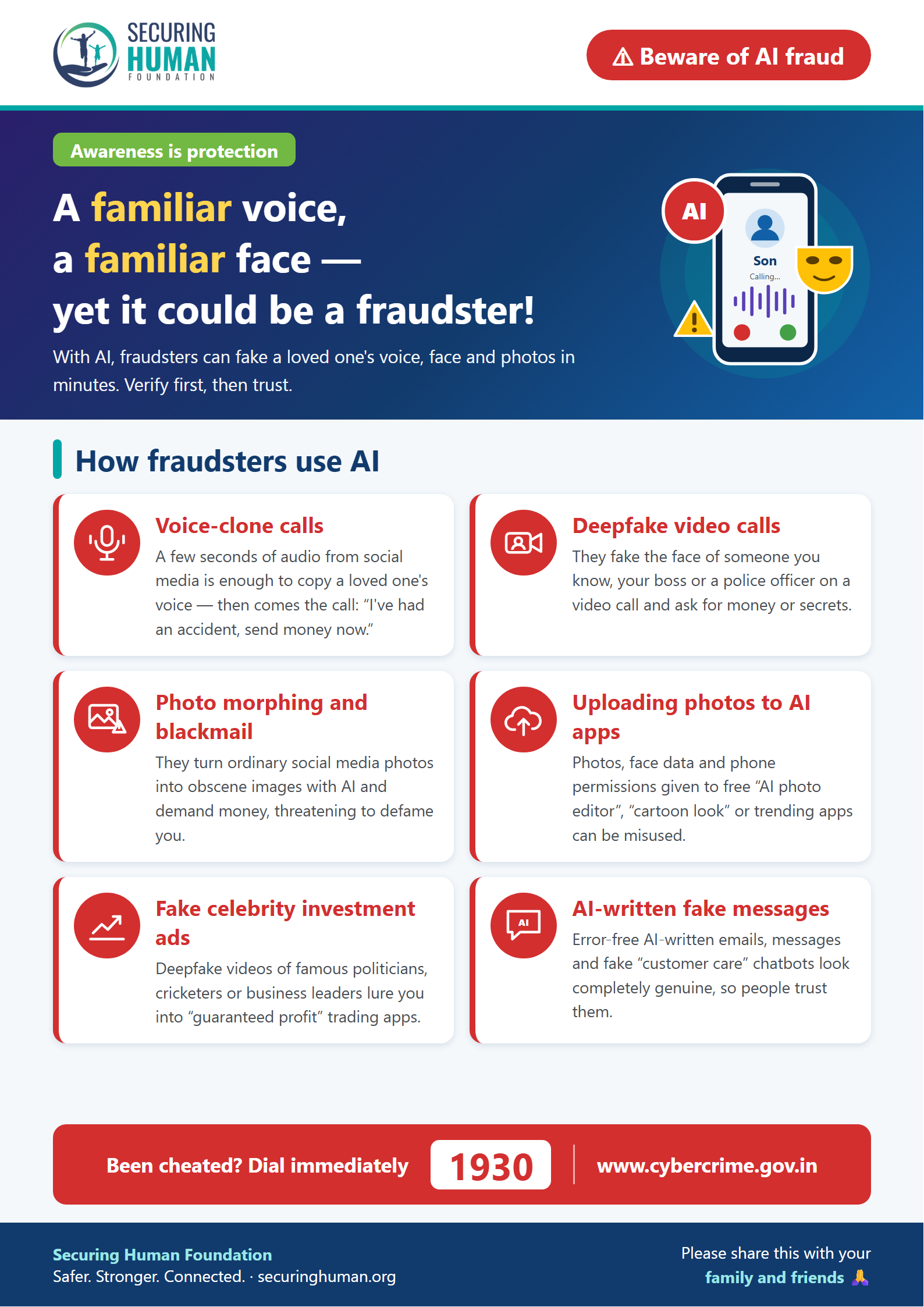
A familiar voice, a familiar face — and it could still be a fraudster!
With AI, fraudsters can now fake a loved one's voice, face and photos in minutes. Not everything you see or hear is real — verify first, then trust.
How fraudsters use AI to cheat
Voice-clone calls
Using a few seconds of audio from social media videos, they copy a loved one's voice exactly and call saying “I've had an accident, send money now.”
Deepfake video calls
They fake the face of someone you know, your boss or a police officer on a video call and ask for money or confidential information.
Photo morphing and blackmail
They turn ordinary social media photos into obscene images with AI, then extort money by threatening to defame you.
The risk of uploading photos to AI apps
Photos, face data and phone permissions you give to free “AI photo editor”, “cartoon look” or trending apps can be misused.
Fake celebrity investment ads
They use deepfake videos of well-known politicians, cricketers or business leaders to lure you into “guaranteed profit” trading apps or schemes.
AI-written fake messages
Error-free emails and messages written by AI, and fake “customer care” chatbots, look completely genuine — so people trust them easily.
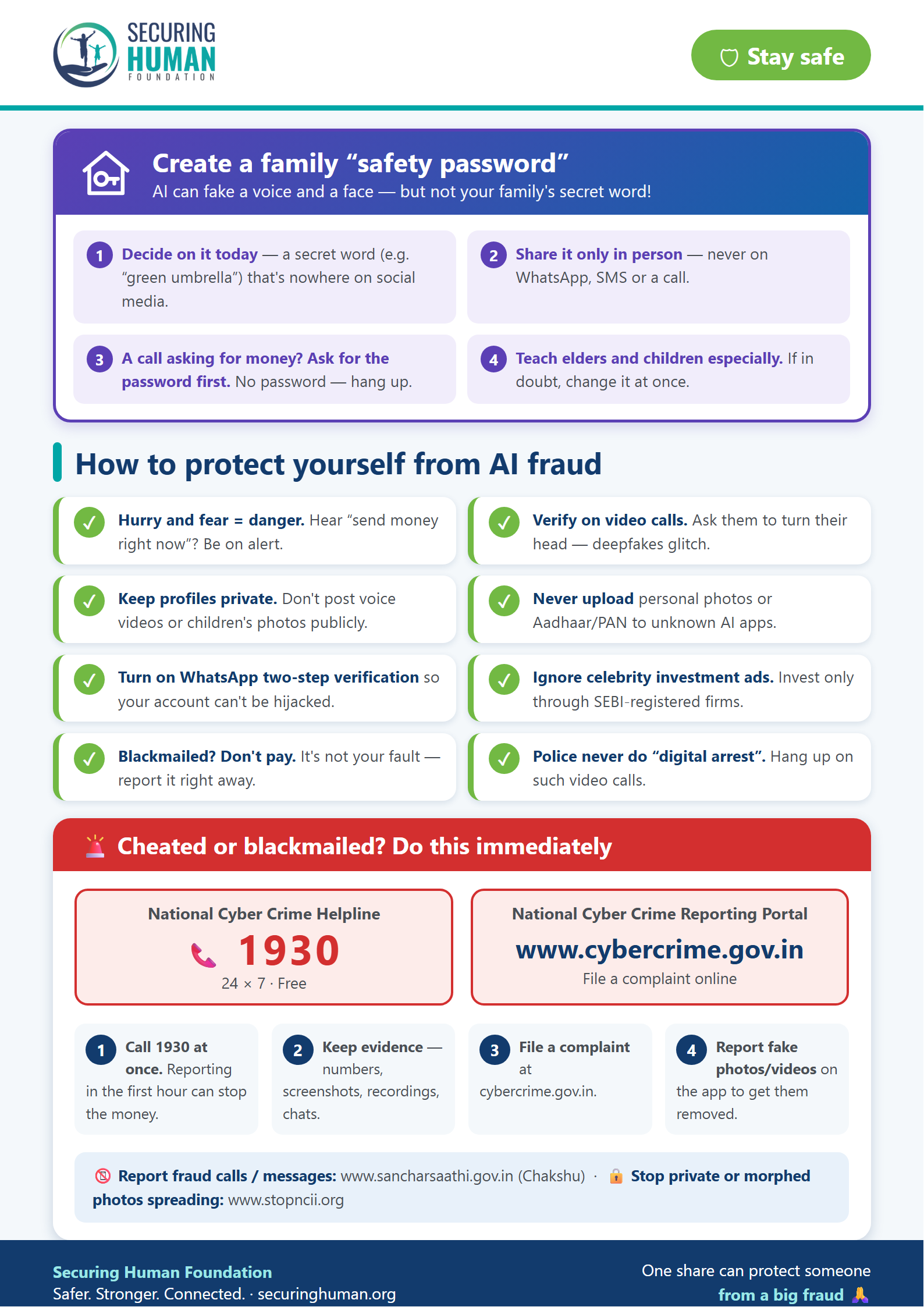
Create a family “safety password”
AI can fake a voice and a face — but not your family's secret word!
- 1
Decide on it today — sit together as a family and choose a secret word or phrase (for example, “green umbrella”). Not a pet's name or your village — nothing that can be found on social media.
- 2
Share it only in person — never over WhatsApp, SMS, email or a phone call. Don't write it down anywhere.
- 3
If a call asks for money or help, ask for the password first. If they don't know it, hang up and call back on the number you already know.
- 4
Teach it especially to elders and children. If you have any doubt, or someone else finds out, change it immediately.
How to protect yourself from AI fraud
Hurry and fear are danger signs. If you hear “send the money right now” or “don't tell anyone”, be on alert.
Hang up and call back yourself. If a call asks for money, ring your relative on the number you already know to confirm.
Verify on video calls. Ask the person to turn their head or wave a hand in front of their face — deepfakes tend to glitch, or the lips don't match.
Keep your social media profiles private. Post fewer public videos with your voice and fewer photos of children.
Never upload to unknown AI apps or chatbots personal photos, children's photos, or documents like Aadhaar, PAN or passport. Check the app's permissions and privacy policy.
Turn on two-step verification on WhatsApp and social media, so nobody can hack your account and ask your friends for money in your name.
Don't trust investment ads featuring celebrities. Invest only through SEBI-registered entities or apps.
If you're blackmailed, don't panic and don't pay. It's not your fault — keep the evidence and file a complaint right away.
Police and government officials never carry out a “digital arrest” over a video call — hang up immediately.
Cheated or blackmailed? Do this immediately
- 1
Call 1930 immediately. If money was lost, reporting within the first hour can help stop it.
- 2
Keep the evidence — numbers, screenshots, call recordings, chats and video links.
- 3
File a complaint at cybercrime.gov.in. Crimes involving women and children can also be reported anonymously.
- 4
Report the fake photo or video on the app or website where it appears and ask for it to be taken down.
Useful links
- Report suspected fraud calls, SMS or WhatsApp messages — Sanchar Saathi (Chakshu)
- Stop private or morphed photos from spreading — StopNCII
Remember: not everything you see or hear is real — verify first, then trust.
Download and share the poster
A ready-to-send poster for WhatsApp.
Please share this with your family and friends 🙏